Build
Assemble practical systems, fixtures and prototypes with clear work surfaces and safe access.
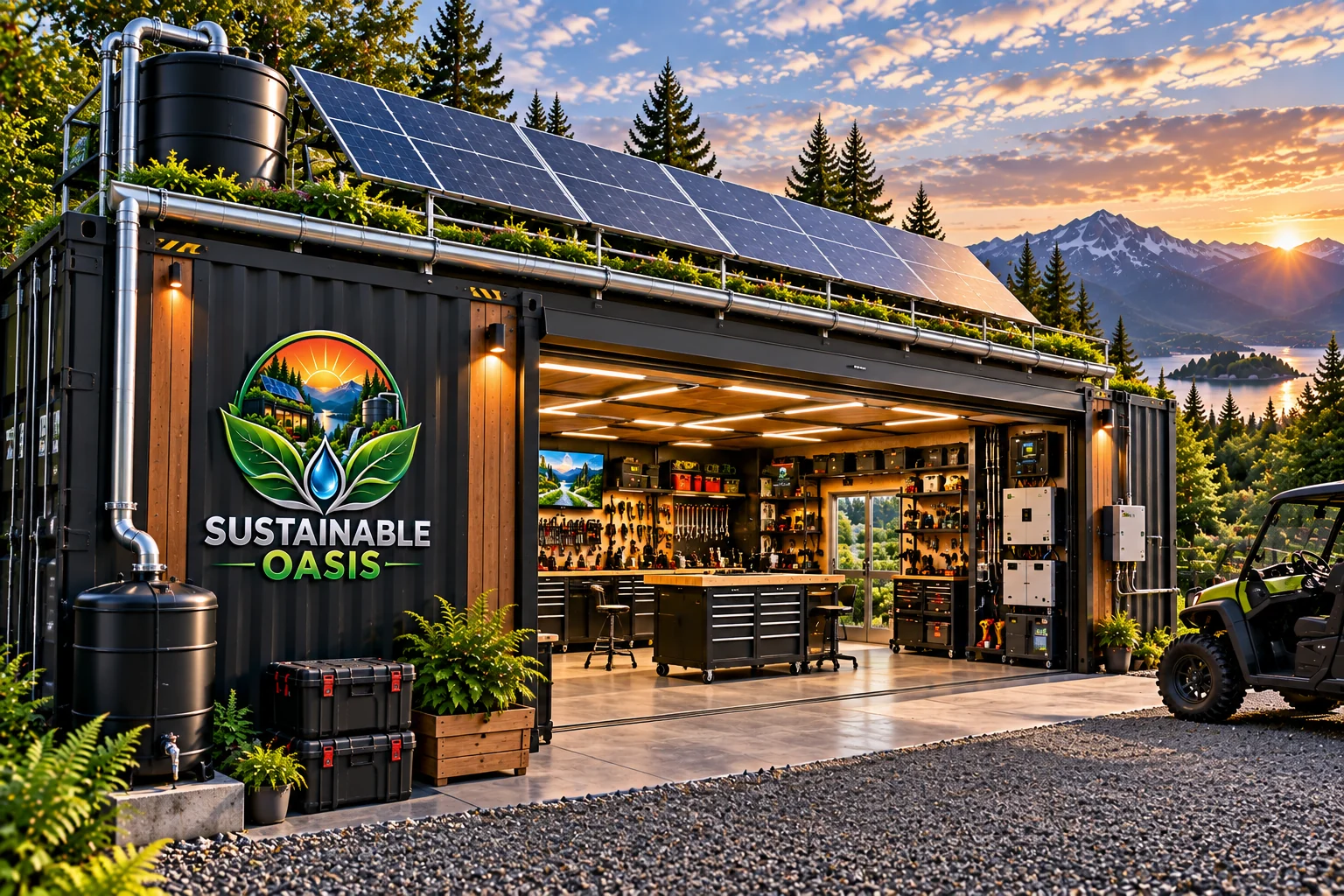
SUSTAINABLE OASIS • CONTAINER WORKSHOP
A modular workspace for building, repairing, measuring, prototyping and documenting the systems that make a more resilient Oasis possible.
Build • Repair • Measure • Prototype • Demonstrate
THE PRODUCTIVE SPACE
The Container Workshop is a compact modular platform for tools, storage, work surfaces, energy, water systems, monitoring and demonstration.
The goal is not to fill a box. It is to create a repeatable workspace that can repair, fabricate, assemble, maintain and document useful systems.
Return to the infrastructure overview →WORKSHOP CAPABILITIES
Each capability should create useful output, measurable learning or longer service life. If it does none of those things, it does not belong in the first build.
Assemble practical systems, fixtures and prototypes with clear work surfaces and safe access.
Keep tools, equipment and infrastructure working longer instead of replacing every failure.
Use meters, logs and repeatable procedures to replace guesses with operating evidence.
Test small ideas before they become expensive, permanent or difficult to reverse.
Record layouts, installation methods, costs, maintenance notes and the lessons behind each result.
Make the work visible enough for partners, learners and future sites to understand the method.
THE WORKSHOP ZONES
A safe layout starts with movement, access and maintenance. The zones below are planning anchors, not a final construction drawing.
THE DEVELOPMENT SEQUENCE
The Container Workshop becomes a field result only when the physical installation, operating conditions and limits are documented.
WHAT THE WORKSHOP SHOULD PRODUCE
The workshop is successful when it turns time, tools and materials into durable capability rather than clutter.
HONEST BOUNDARIES
Container conversions need site-specific review. A concept image does not prove compliance, structural capacity or production readiness.
The first responsible investment is a safe layout and an operating checklist, not more equipment.
ECONOMIC OUTPUTS
Revenue opportunities must follow real capability. The first objective is useful work; the second is to document which services can responsibly pay for the next improvement.
WORKSHOP INTEREST
Tell us about the work you want a Container Workshop to support. This is an expression of interest, not a construction quote or a promise of installation.
Explore custom project support →CLEAR EXPECTATIONS
No. It is a development pathway. The current page describes the operating model while the physical layout, equipment and compliance requirements are validated.
Possibly, but the container, site and conversion need a local review for structure, ventilation, electrical work, fire safety, access and permits.
Start with the work, not the container: define the first workstation, tools, safety boundaries, storage needs and measurable output.
The workshop can support energy, water, monitoring and future Complete Oasis work, but each connection should be tested and documented before expansion.
BUILD THE NEXT PROOF