
Generation
Solar, grid or generator inputs provide power under named conditions. Record what is available instead of assuming the source is constant.
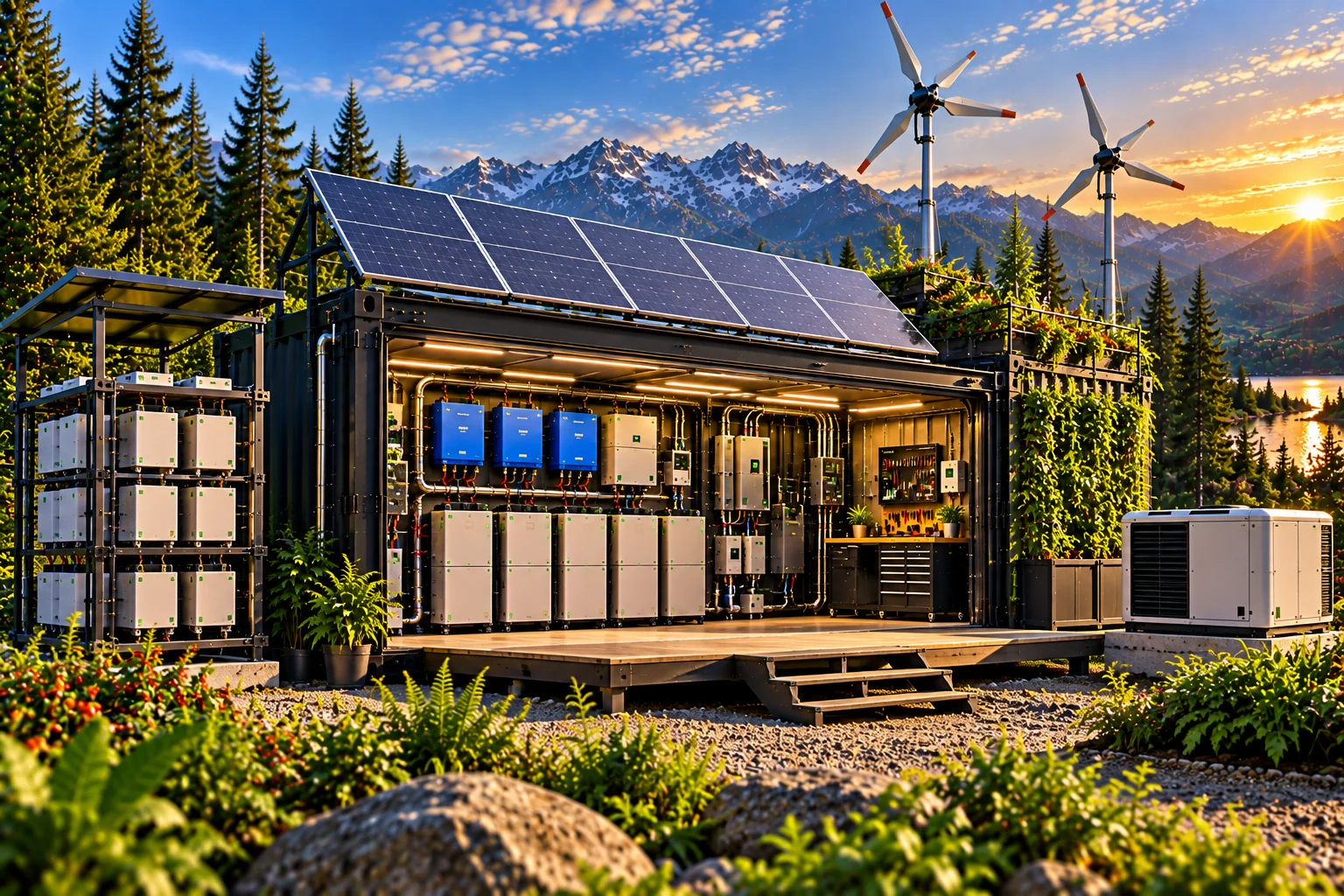
SUSTAINABLE OASIS • ENERGY INFRASTRUCTURE
Build a responsible energy pathway that can generate, store, distribute and measure power for essential loads, water, food, communications and useful work.
Generate • Store • Distribute • Measure • Optimize
THE ENERGY LAYER
A resilient energy pathway starts by understanding the loads that matter, then matching generation, storage, distribution and monitoring to those loads.
The objective is not to promise unlimited power. It is to reduce surprises, protect essential functions and create a measured path that can expand when the evidence supports it.
Explore the energy category →SYSTEM ARCHITECTURE
Build each layer within a known boundary. Connect them only when the safety, sizing, maintenance and measurement questions are understood.
Solar, grid or generator inputs provide power under named conditions. Record what is available instead of assuming the source is constant.
Batteries or other storage shift energy across time. Track state of charge, temperature, limits, cycle life and losses.
Deliver power to essential loads through correctly sized protection, controls, transfer equipment and accessible isolation points.
Observe generation, consumption, storage, uptime, maintenance and cost so each improvement has a reason.
THE ENERGY LEDGER
A simple accounting rule keeps optimistic diagrams honest. Every input must become useful output, stored energy or a named loss.
SAFETY BOUNDARY
This page is a planning and infrastructure overview, not electrical design instructions. Batteries, transfer equipment, permanent wiring, generators and interconnection require qualified review.
The first responsible energy project is a bounded measurement bench that teaches the real loads before a larger investment.
PRIORITY LOADS
Energy planning becomes useful when priorities are explicit. Essential loads come before convenience loads and expansion.
THE DEVELOPMENT SEQUENCE
The pathway stays modular so the project can pause, learn and improve without turning one unknown into a larger unknown.
ECONOMIC OUTPUTS
Revenue opportunities follow reliable capability: products and kits first, then installation, documentation and services supported by measured results.
ENERGY PATHWAY INTEREST
Tell us about your energy question, load or site. This is an expression of interest, not an electrical quote or a performance guarantee.
Review the Starter Energy Kit →CLEAR EXPECTATIONS
No. It is an infrastructure pathway for understanding loads, generation, storage, distribution and measurement. A real system requires site-specific design and qualified review.
Yes. Measuring actual loads and defining priorities can come first. Solar, backup power and other sources should follow the evidence.
It is an accessible starting point for learning essential loads, building useful backup capacity and creating a responsible path toward a larger energy system.
Qualified professionals familiar with local electrical code, utility requirements, equipment ratings and the specific site should handle regulated interconnection and permanent wiring.
BUILD THE NEXT PROOF