Capture & source
Collect rainwater or identify a known source while recording roof, well, surface, municipal and seasonal conditions.
SUSTAINABLE OASIS • WATER SYSTEM
The Oasis Water System connects capture, filtration, storage, use, recovery and measurement so every litre has a defined job—and every safety boundary remains visible.
Untreated recovered water is not drinking water. This page is a development framework, not a potable-water design, installation quote or product-stock promise.
THE WATER BOUNDARY
Rain, well, municipal, surface and recovered flows are not interchangeable. The right system begins with a defined source, a defined use, a safe separation and a record of what enters, leaves and needs care.
Start with a non-potable loop when possible. Add treatment, storage, pressure, automation and building connections only when the next layer is justified by evidence, professional review and local requirements.
See water inside the Tiny House model →OASIS WATER ARCHITECTURE
Build the loop in stages. Keep drinking water, non-potable water, wastewater and environmental discharge separated until qualified review confirms a safe connection.
Collect rainwater or identify a known source while recording roof, well, surface, municipal and seasonal conditions.
Screen, settle and treat for the intended use. Select media, flow, contact time and testing rather than assuming one filter does everything.
Protect tanks, pumps, pressure, overflow, backflow and access while delivering water to a defined household, food or workshop load.
Reuse selected flows where permitted, track volume and quality, and document what the loop saves, requires and cannot safely do.
THE WATER LEDGER
A resilient water system is not defined by the biggest tank or the most filters. It is defined by useful service, safe separation, recoverable maintenance and a clear record.
SANITATION BOUNDARY
Water treatment is use-specific. Potable water, greywater, blackwater, rainwater, surface water and well water have different hazards, rules and testing requirements.
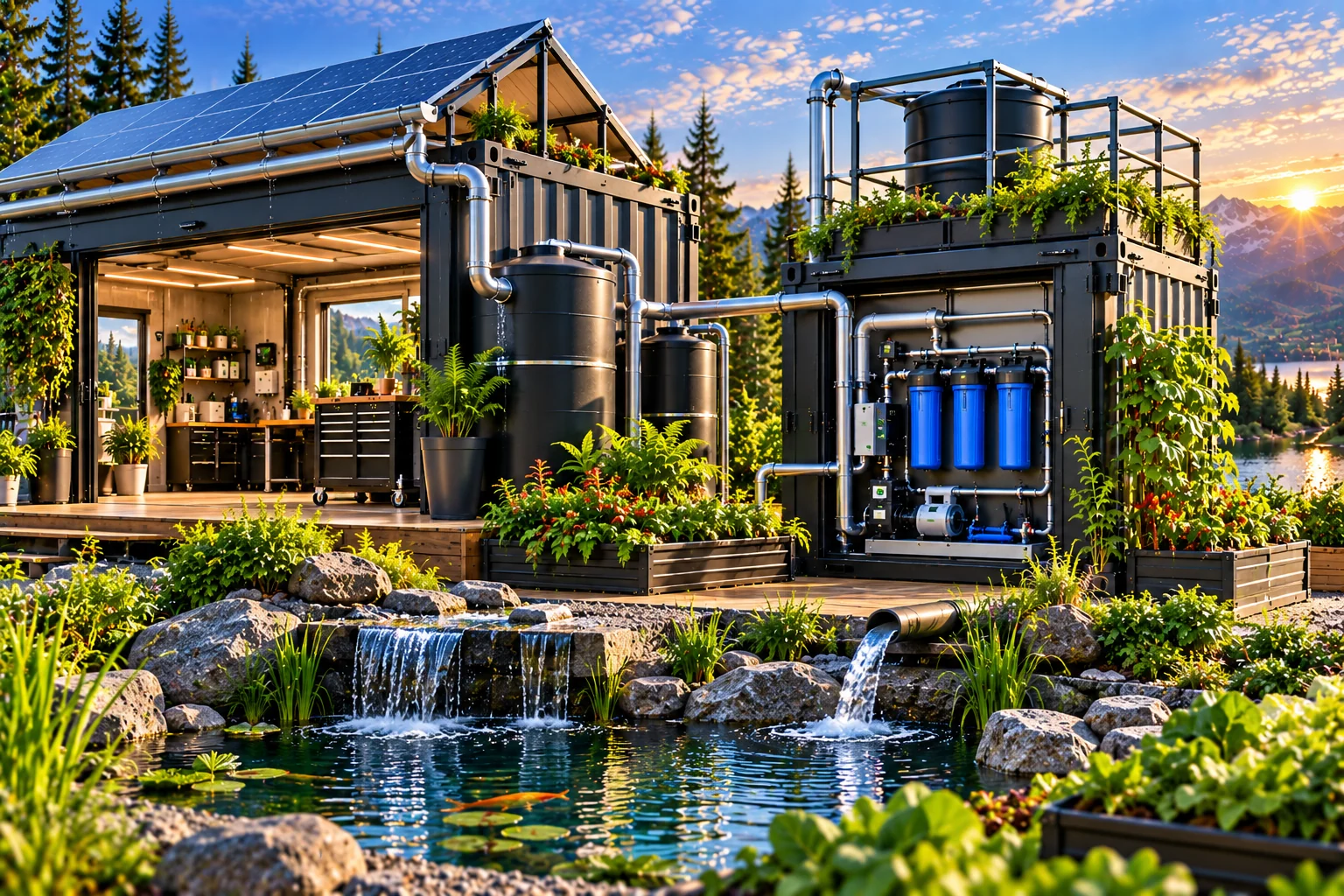
A water concept image is not proof of water quality, code compliance, potable certification, installation completion or regulatory approval.
WATER CYCLE MODULES
Each module follows the shared anatomy: KIT → MODULE → COMPONENT → SENSOR → DATA → GUIDE.
THE DEVELOPMENT SEQUENCE
Progress from Lab → Project → Infrastructure. Every stage earns the next connection through measured performance and safe operation.
EVIDENCE LEVELS
Recommended, Lab Tested, Oasis Proven and Versioned distinguish research, controlled evidence, real operation and repeatable documentation.
PRACTICAL OUTPUTS
Revenue pathways follow documented capability: kits and components first, then planning, installation support, monitoring and knowledge—without claiming guaranteed savings or potable results.
WATER PATHWAY INTEREST
Tell us about your source, intended use, site or constraint. This is an expression of interest—not a water-quality certification, plumbing quote, permit, investment offer or performance guarantee.
Review the Water Recovery Kit →CLEAR EXPECTATIONS
No. It is a modular infrastructure pathway. Potable treatment, permanent plumbing, testing, permits and code compliance require qualified professionals and local review.
No—not without appropriate source assessment, certified treatment, testing and compliance. Untreated recovered water is not drinking water.
Capture a known source, measure it and connect it to a clearly labelled non-potable use such as controlled irrigation, with screened storage, overflow protection and a documented shutdown.
Water supports the Tiny House, Food System, Mobile Oasis, Microgrid and Complete Oasis, but each interface must be sized, protected, monitored and tested separately.
BUILD THE NEXT PROOF