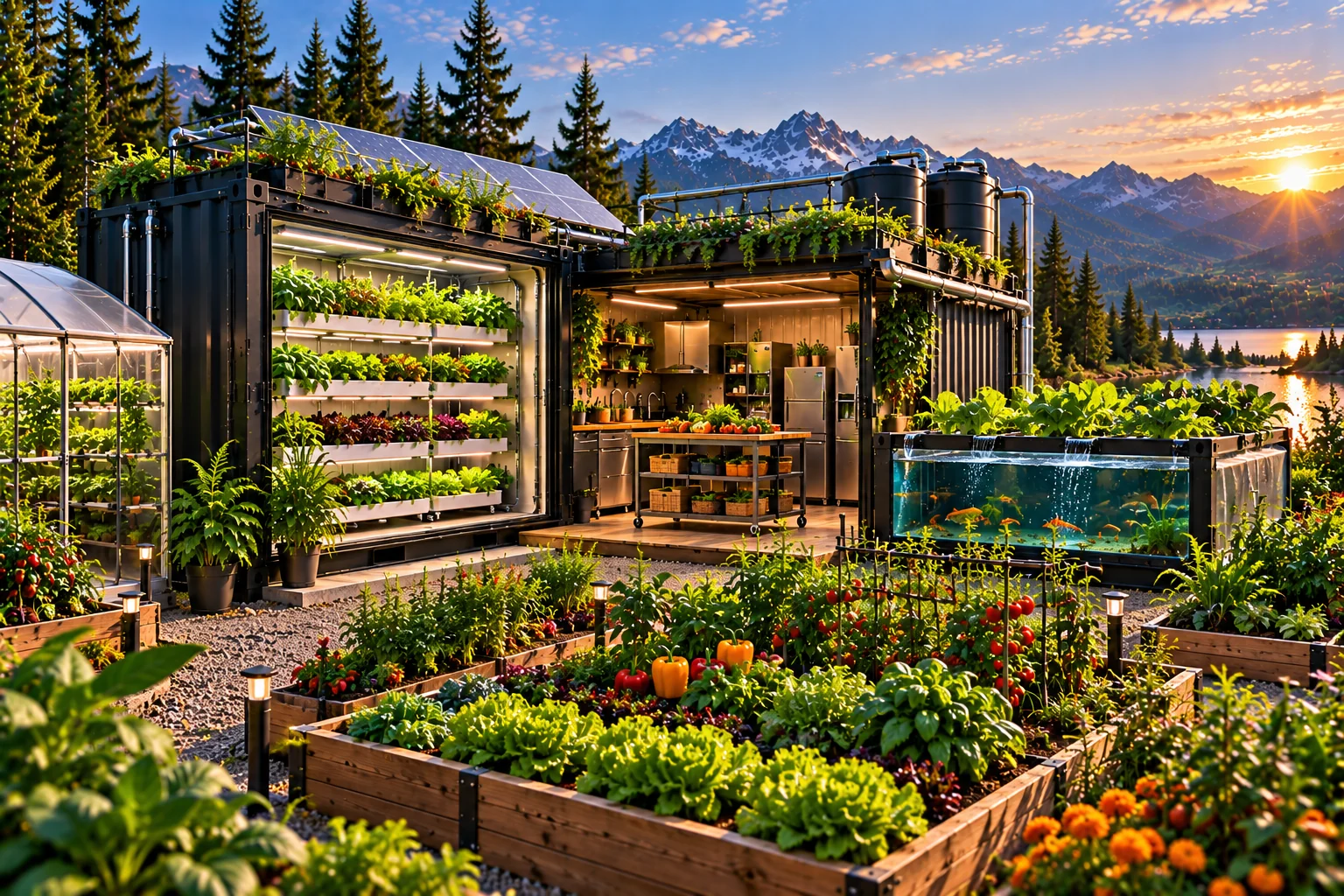
Sustainable Oasis food-growing infrastructure concept
System development

SUSTAINABLE OASIS • FOOD INFRASTRUCTURE

Grow what the future can repeat.

Build a practical food pathway that connects light, water, nutrients, space, labour, yield and preservation—so each season teaches the next one how to improve.

Grow • Nourish • Preserve • Recover • Measure

THE FOOD LAYER

Food is a living system, not a single device.

A resilient food pathway starts with a repeatable growing scenario, then connects light, water, nutrients, space, labour, harvest and preservation around a clear purpose.

The objective is not to promise unlimited yield. It is to make the inputs visible, protect food safety, learn what the site can support and expand only when the evidence is useful.

Explore the food category →

SYSTEM ARCHITECTURE

Four layers keep the harvest accountable.

Build each layer within a known boundary. Connect them only when the water, food-safety, climate, maintenance and measurement questions are understood.

02

Water & nutrients

Make source quality, irrigation, nutrient inputs and drainage visible before adding complexity or recirculation.

03

Growing & care

Use simple routines for planting, observation, climate, pest response and maintenance that can be repeated without guesswork.

04

Harvest & loops

Protect edible quality, preserve useful surplus and return seed, compost and safe material streams to the next cycle.

THE FOOD LEDGER

Account for the whole cycle.

A simple accounting rule keeps beautiful growing diagrams honest. Every input should become edible yield, a useful next-cycle resource, preservation or a named waste stream.

FOOD INPUTS = EDIBLE YIELD + SEED/COMPOST OUTPUTS + PRESERVATION + WASTE
  1. 1
    InputsLight, water, nutrients, seed, space, labour and energy under named conditions.
  2. 2
    Growing conditionsRecord light hours, temperature, humidity, flow, nutrient strength and seasonal changes.
  3. 3
    YieldTrack edible mass, quality, harvest timing, survival and the effort required to produce it.
  4. 4
    LoopsSeparate seed stock, compost inputs, recovered water, preservation and waste so the next cycle can improve.

SAFETY BOUNDARY

Grow with care. Serve with evidence.

This page is a planning and infrastructure overview, not food-safety, electrical, structural or water-treatment instructions. Each site and crop requires context-specific review.

  • Use water appropriate for the intended crop and keep potable, irrigation and reclaimed sources clearly separated.
  • Handle nutrients, amendments, seeds, harvests and preservation with clean routines and traceable labels.
  • Protect people from electrical, lighting, heat, humidity, lifting and structural hazards in controlled environments.
  • Respect local food, wastewater, building, electrical and agricultural requirements before selling or serving produce.

The first responsible food project is a bounded growing test that measures inputs and yield before a larger promise is made.

PRIORITY OUTPUTS

Grow what protects the mission.

Food planning becomes useful when its purpose is explicit. Start with crops and routines that build nourishment, learning, seed resilience or reliable local capability.

01 • NOURISHFresh greens & herbsShort-cycle crops that make light, irrigation, harvest and daily care easy to observe.Metric: edible yield per cycle
02 • SEASONStaples & local cropsChoose varieties that fit climate, space, seasonality and the people available to care for them.Metric: yield per area
03 • CONTINUESeedlings & seed stockBuild propagation routines and preserve knowledge that makes future cycles less dependent on a single purchase.Metric: viable starts
04 • PRESERVEStorage & processingExtend useful harvests through safe drying, cooling, fermenting or other appropriate preservation methods.Metric: shelf life
05 • RETURNCompost & material loopsSeparate safe organic streams and return nutrients or knowledge without hiding contamination or loss.Metric: waste avoided

THE DEVELOPMENT SEQUENCE

Let one healthy cycle earn the next.

The pathway stays modular so the project can pause, learn and improve without turning one unknown into a larger unknown.

01 • CONTEXTChoose the scenarioName the site, crop, season, people, available light, water source and intended use before buying equipment.
02 • BOUNDStart with one bedUse a small, repeatable growing area with clear access, sanitation, drainage and a simple maintenance routine.
03 • LOGMeasure the baselineRecord light, water, nutrients, labour, harvest weight, losses and the conditions that changed them.
04 • TESTChange one variableAdjust one layer—variety, irrigation, light, timing or preservation—so the result can teach rather than confuse.
05 • REVIEWDecide what earns scaleCompare yield, quality, cost, effort, seasonality and repairability before adding capacity or making a promise.

ECONOMIC OUTPUTS

Food evidence can support the engine.

Revenue opportunities follow reliable capability: products and kits first, then workshops, local production and documentation supported by measured results.

01 • PRODUCTSCurated growing componentsRecommend lighting, irrigation, growing media, monitoring and preservation tools around a defined use case.
02 • KITSGrowing Kit pathwaysGive people an accessible starting point for seeds, irrigation, lighting, monitoring and repeatable routines.
03 • WORKSHOPSHands-on learningTeach bounded experiments, harvest routines, preservation and maintenance that build local capability.
04 • KNOWLEDGEGuides & test recordsTurn seasonal lessons into resources that help another project make a safer, more resilient decision.

FOOD PATHWAY INTEREST

What should the first growing cycle teach?

Tell us about your crop, site, water source or constraint. This is an expression of interest, not a food-safety certification, agricultural guarantee or production quote.

Review the Growing Kit →

We use this information only to respond about Sustainable Oasis food pathways and projects.

CLEAR EXPECTATIONS

Questions to answer before adding capacity.

Does this page promise food independence?

No. It is an infrastructure pathway for learning what a site, crop and care routine can reliably produce. Yield, climate, pests, labour and food safety always require context-specific review.

Can I start in a small space?

Yes. A small bed, shelf or bounded container can teach light, water, nutrients, labour and harvest before a larger investment is made.

What does the Growing Kit support?

It is an accessible starting point for seeds and starts, irrigation, lighting, monitoring and repeatable routines. The kit is a pathway, not a guarantee of yield.

How do we design for future generations?

Track yield alongside water, energy, space, labour, waste, repairability and seasonal resilience. A system earns expansion when it remains useful, understandable and maintainable.

BUILD THE NEXT PROOF

Start with one healthy cycle.