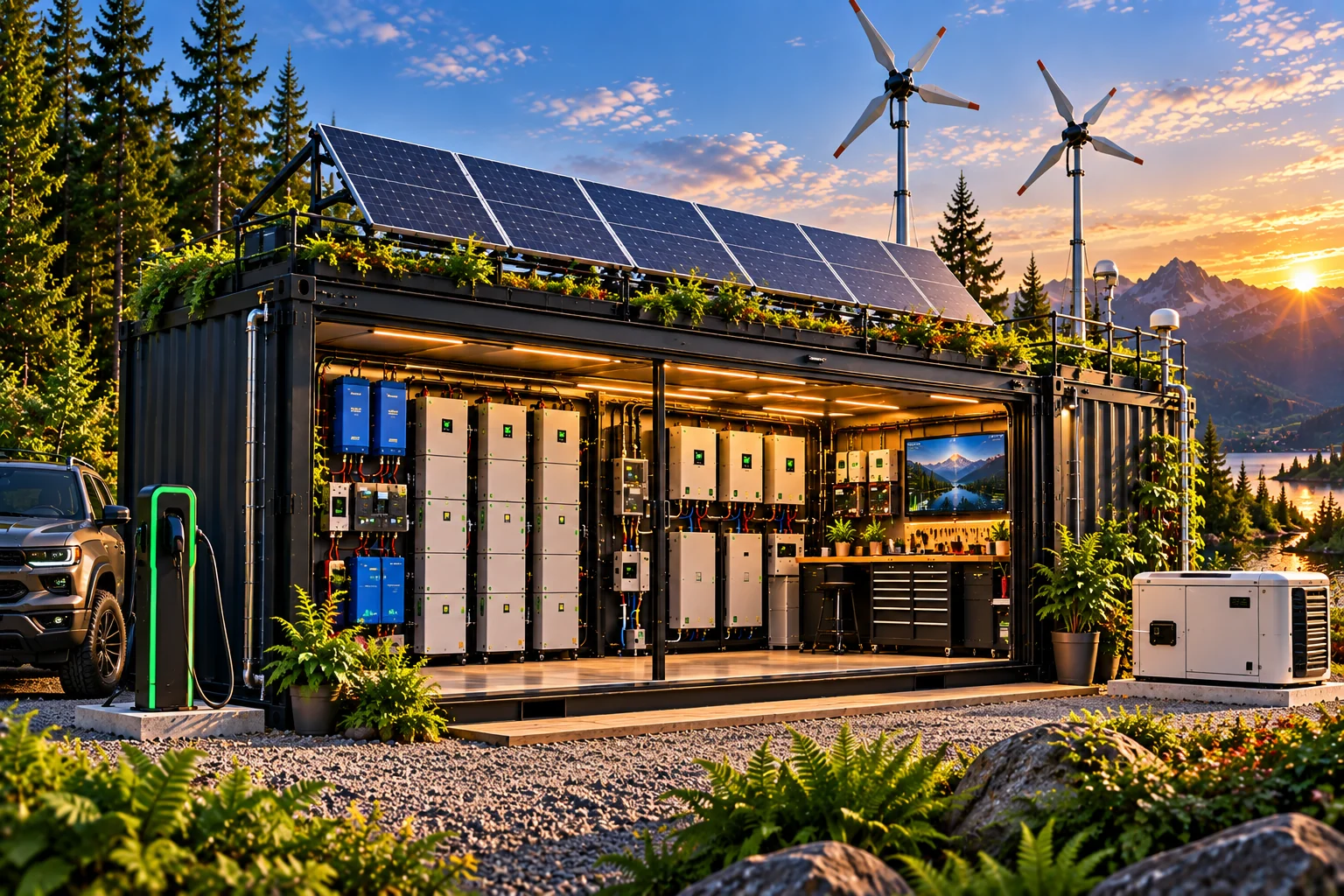
Sustainable Oasis microgrid infrastructure concept
System development

SUSTAINABLE OASIS • MICROGRID

Connect the pieces. Keep the limits visible.

Build a modular energy coordination layer that can generate, store, convert, distribute and measure power for essential services—without confusing a concept with a completed installation.

Generate • Store • Convert • Distribute • Measure • Improve

THE COORDINATION LAYER

A microgrid is an operating agreement, not free energy.

A resilient microgrid makes the relationship between sources, storage, conversion, loads, controls and people visible. It decides what receives power, when, under which conditions and with what fallback.

The objective is not to promise unlimited independence. It is to protect essential services, reduce surprises and create a modular path that earns each new connection through evidence.

Explore the energy category →

MICROGRID ARCHITECTURE

Four layers make every handoff accountable.

Build each layer within a known boundary. Connect layers only when sizing, protection, maintenance, manual fallback and measurement are understood.

02

Storage

Batteries or other storage shift energy across time. Track state of charge, temperature, limits, cycle life and losses.

03

Conversion & protection

Controllers, inverters, disconnects, breakers and transfer equipment keep voltage, current, isolation and failure states visible.

04

Distribution & measurement

Route power to prioritized loads and observe generation, consumption, uptime, maintenance and cost through the SO‑EMS method.

THE MICROGRID LEDGER

Measure energy before interpreting energy.

The ledger separates useful service from storage change, conversion losses and curtailment. Recovery can improve a system; it does not create energy.

ENERGY IN = ESSENTIAL SERVICE + STORAGE CHANGE + LOSSES + CURTAILMENT
  1. 1
    InputsWhich source entered, in what units, under which weather, grid or operating conditions?
  2. 2
    Useful serviceWhich essential load received power, for how long and with what priority?
  3. 3
    Storage changeWhat entered or left storage, and what limits or reserve rules applied?
  4. 4
    Losses & curtailmentWhere did heat, standby, conversion, wiring, downtime or unavailable capacity affect the result?

SAFETY BOUNDARY

Coordinate responsibly.

This page is a planning and infrastructure overview, not electrical design instructions. Permanent wiring, interconnection, batteries, generators and transfer equipment require qualified review.

  • Start with a bounded low-voltage measurement bench and clearly labelled isolation points.
  • Use correctly rated protection, enclosures, conductors, grounding and disconnects.
  • Never backfeed a building or modify utility interconnection without qualified professionals and approval.
  • Keep manual fallback, emergency shutdown and maintenance access understandable to the operator.

A microgrid earns its next connection only when its current boundary is measurable, maintainable and safe.

CONNECTED SYSTEMS

Power the services that protect the mission.

The microgrid is useful because it connects energy decisions to water, food, workshop, communication and control—one measured handoff at a time.

01 • ENERGYSources & storageSolar, grid, backup power and batteries with known limits, priorities and reserve rules.Metric: uptime and losses
02 • WATERPumping & treatmentSupport collection, filtration, pressure and monitoring while recording energy per volume.Metric: energy per litre
03 • FOODGrowing & preservationServe irrigation, controls, lighting or cooling only where the food output justifies the input.Metric: output per input
04 • WORKWorkshop & repairProtect useful tools, fabrication and maintenance that extend the life of the wider infrastructure.Metric: productive hours
05 • CONTROLSO‑EMS & automationObserve the system, automate selected decisions and keep a clear manual fallback when signals fail.Metric: data quality

THE DEVELOPMENT SEQUENCE

Scale from a kit to an infrastructure layer.

Evidence comes before scale. Each gate should reduce uncertainty instead of moving it into a more expensive system.

01 • KITLearn one loadMeasure a small essential load or source with a clear purpose, safe boundary and simple record.
02 • SYSTEMConnect one handoffAdd generation, storage or conversion while naming the protection, maintenance and fallback rules.
03 • MEASURERun the SO‑EMS ledgerSeparate input, useful output, storage change, recovery, losses, uptime and cost.
04 • IMPROVEChange one variableTest a control, component, priority or operating routine without hiding the trade-off it creates.
05 • INFRASTRUCTUREEarn the next connectionExpand toward water, food, workshop or complete Oasis only when the evidence supports the decision.

SCALE GATES

A larger system must carry its evidence forward.

These gates keep a beautiful diagram from becoming an expensive assumption.

01 • DEFINEWhat must be protected?Name essential loads, operating hours, acceptable downtime and the people responsible for the system.
02 • SIZEWhat can the site support?Use measured demand, source conditions, storage limits, conversion efficiency and maintenance capacity.
03 • PROTECTWhat happens when it fails?Design isolation, reserve, alarms, manual operation, safe shutdown and qualified review into the pathway.
04 • REPLICATEWhat can another site learn?Publish conditions, cost, performance, limitations and the reason the next project should—or should not—copy it.

ECONOMIC OUTPUTS

A measured microgrid can fund the next proof.

Revenue pathways follow reliable capability: products and kits first, then design, installation, documentation and future replication—without claiming completed installations or guaranteed savings.

01 • PRODUCTSCurated componentsRecommend sources, storage, controls, protection and monitoring around a defined load and site boundary.
02 • KITSModular starting pointsHelp people learn one energy question before they commit to a larger system or permanent connection.
03 • SERVICESDesign & implementationOffer planning, layout and installation pathways where qualified expertise and local requirements are respected.
04 • KNOWLEDGEGuides & test recordsTurn the ledger, failures and maintenance lessons into resources that make another decision safer.

MICROGRID PATHWAY INTEREST

What should the first connection protect?

Tell us about your site, source, load or constraint. This is an expression of interest, not an electrical quote, utility approval or performance guarantee.

Review the Energy System →

We use this information only to respond about Sustainable Oasis energy pathways and projects.

CLEAR EXPECTATIONS

Questions to answer before connecting a system.

Is this a complete off-grid microgrid design?

No. It is a modular development pathway for understanding sources, storage, conversion, distribution and measurement. A real installation requires site-specific engineering, code review and qualified professionals.

Can I start without solar panels?

Yes. Measuring actual loads and defining priorities can come first. Generation, storage and backup capacity should follow the evidence.

What does SO‑EMS measure?

It is the Sustainable Oasis Energy Management System approach: make input, useful output, storage change, recovery, losses, uptime and cost visible before interpreting performance.

Can one microgrid power water and food?

It can be designed to support those services, but each handoff must be sized, protected, monitored and tested separately. One successful connection does not prove the next one.

BUILD THE NEXT PROOF

Start by measuring one essential load.